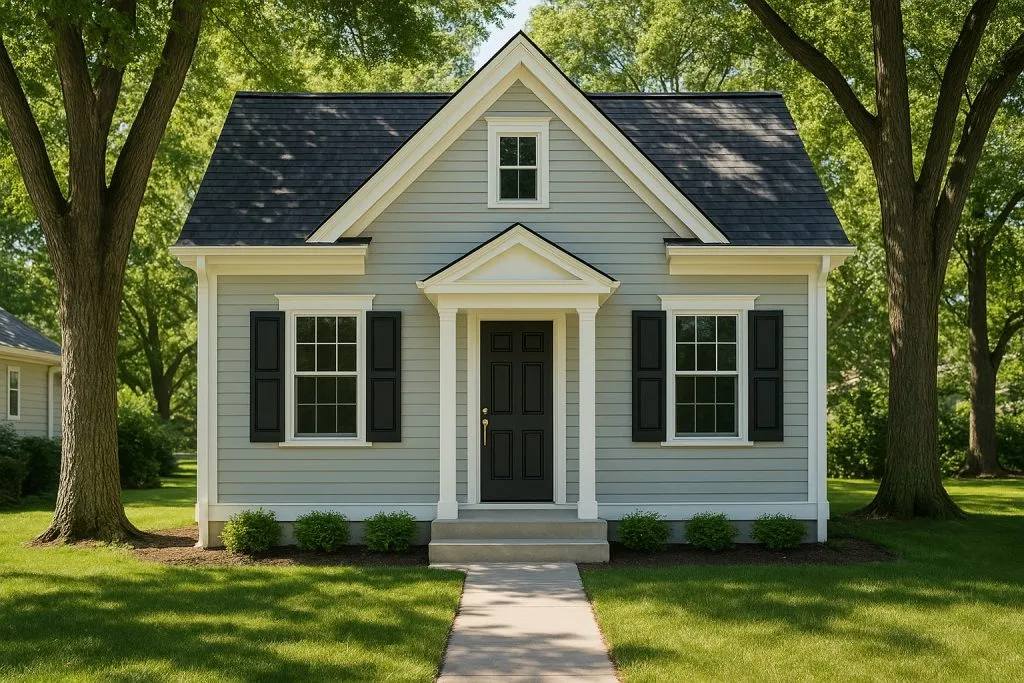
If you have started researching a backyard home, you have probably run into two very different paths: a prefab ADU that arrives mostly finished, or a custom design-build shaped around your property from the ground up. Both can give you a real, comfortable second home, but they behave very differently across the factors Iowa homeowners actually care about. This head-to-head comparison lays out where a prefab ADU shines, where a custom build pulls ahead, and how to decide which fits your family.
First, a quick definition. A prefab ADU (sometimes called modular or panelized) is built largely in a factory and delivered to your lot, where it is set and connected. A custom design-build is drawn for your specific site and constructed to match your needs, your yard, and your existing home. The right answer depends less on the marketing and more on your land, your timeline, and how personal you want the result to feel.
Prefab ADU vs custom build: the factors that matter
| Factor | Prefab ADU | Custom Design-Build |
|---|---|---|
| Design flexibility | Fixed catalog of models and finishes | Layout, size, and finishes shaped to you |
| Site fit | Best on flat, easy-access lots | Adapts to slope, setbacks, and odd yards |
| Timeline feel | Fast once the unit is built, but delivery windows vary | Steady schedule managed locally start to finish |
| Delivery access | Needs crane and truck room to set the box | Built in place, no oversized delivery needed |
| Iowa code & permitting | May need adaptation to local rules | Drawn to local code from day one |
| Matching your home | Harder to match siding and rooflines | Can echo your existing home’s look |
| Cost drivers | Unit price plus site work and hookups | All-in local scope, fewer surprise add-ons |
Design flexibility is the biggest tradeoff
A prefab ADU keeps things simple by limiting choices. You pick from a set of models, choose a couple of finish packages, and that is largely the design. For some families, that simplicity is a relief. But if you are housing an aging parent who needs a zero-step entry and a wider bathroom, or you want a specific window to catch the afternoon light, those changes are often where a prefab ADU gets rigid or expensive.
A custom build starts from your needs instead of a catalog. Our floor plans range from a 475 sq ft Studio+ to an 816 sq ft two-bedroom, and every layout can be adjusted for accessibility, storage, or how you plan to use the space. If personalization matters, that flexibility usually tips the scale. You can compare starting layouts on our floor plans page.
Your Iowa lot decides more than the brochure does
People often assume a prefab ADU is automatically easier. On a flat, open lot with a wide driveway, it can be. But many Iowa yards have slopes, mature trees, tight side setbacks, or no clear path for a crane and a delivery truck. Setting a factory-built box in those conditions can add cost or simply not work.
A custom build sidesteps that because it goes up in place. Crews adapt the foundation to the grade and work within the access you already have. Setback requirements apply either way, so the site plan matters no matter which route you choose. The team at AccessoryDwellings.org is a solid neutral resource for understanding how site conditions shape any ADU project.
Timeline and cost are more alike than you think
The prefab pitch is speed, and factory construction can be quick. But the clock includes the queue at the factory, delivery scheduling, and the same site work every home needs: foundation, utility hookups, and connection to your existing systems. Those steps happen on your Iowa lot regardless of where the walls were built.
On cost, both paths run into the same reality. Roughly 7 out of 10 people who reach out assume they can build for under $50,000, usually because of TV shows and social media. A real, permitted, full-size ADU (prefab or custom) costs well above that once you account for foundation, utilities, code-compliant construction, finishes, and site work. A prefab unit price rarely includes all of that, so compare all-in, not sticker to sticker. You can see how we think about scope on our pricing page, and we are always happy to walk through the numbers on a free call.
Which is right for you?
Choose a prefab ADU if you have a flat, easy-access lot, you are comfortable with a fixed model and finish set, and a standard layout genuinely meets your needs. It can be a clean, efficient path when the site and the catalog line up.
Choose a custom design-build if your yard has any complications, if you want the ADU to match your home, or if the space has to work hard for a specific person or purpose (an aging parent, a rental you want to stand out, a home office plus guest suite). Custom also keeps one local team accountable for design, permitting, and construction, so you are not coordinating a factory, a delivery crew, and a site contractor yourself.
Not sure where your property lands? That is exactly what a conversation is for. Book a free, no-pressure consultation and we will look at your lot, your goals, and your budget, then tell you honestly which path fits.
Frequently asked questions
Is a prefab ADU always cheaper than a custom build?
Not necessarily. A prefab ADU quote often covers the unit but not the foundation, delivery, crane, or utility hookups. Once you add those in, an all-in comparison with a custom build is usually much closer than it first appears.
Can a prefab ADU be delivered to any Iowa lot?
No. Delivery needs truck access and room for a crane to set the unit. Sloped, wooded, or tight lots can make a prefab ADU difficult or costly, while a build-in-place approach adapts to those conditions.
Which option is better for housing an aging parent?
A custom build is often the stronger fit because accessibility features like zero-step entries, wider doorways, and adjusted bathrooms can be designed in from the start rather than retrofitted onto a fixed prefab layout.